Have you ever found yourself typing “panick” and wondering whether it looks right? If so, you’re not alone. Many English learners and native speakers alike get confused when deciding between panic vs panick, especially because English spelling rules can sometimes feel inconsistent.
The good news is that the answer is straightforward. Understanding the difference between panic and panick can help you avoid a common spelling mistake and improve your writing confidence. Whether you’re writing an email, school assignment, blog post, or social media update, knowing the correct spelling ensures your message looks professional and polished.
Quick Answer
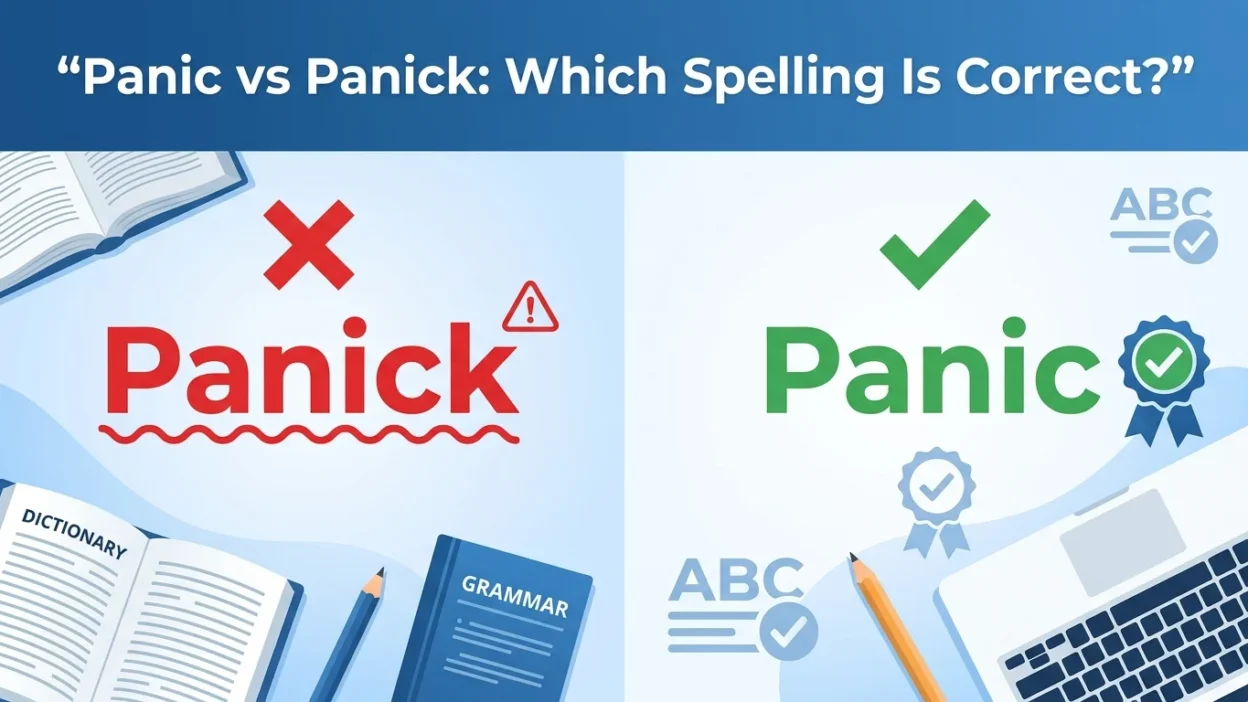
The correct spelling is panic.
Panick is not a recognized English word and is considered a spelling mistake.
✅ Correct: Don’t panic before the interview.
❌ Incorrect: Don’t panick before the interview.
If you’re choosing between panic vs panick, always use panic.
What Does “Panic” Mean?
The word panic can function as both a noun and a verb.
As a noun, it refers to a sudden feeling of overwhelming fear or anxiety.
As a verb, it means to become frightened suddenly and react without thinking clearly.
Panic as a Noun
Examples:
- A wave of panic spread through the crowd.
- Investors reacted with panic during the market downturn.
- She felt a moment of panic before speaking on stage.
Panic as a Verb
Examples:
- Don’t panic if you make a mistake.
- He began to panic when he couldn’t find his passport.
- Students sometimes panic before important exams.
In both cases, panic relates to fear, anxiety, alarm, or emotional distress.
Why Is “Panick” Incorrect?
The spelling panick is incorrect in standard English.
Many people mistakenly add a “k” because they see similar words ending in “-ick,” such as:
- trick
- stick
- brick
- quick
However, panic is already a complete word and does not require an additional “k.”
English dictionaries, grammar guides, and style manuals recognize only panic.
Therefore:
- panic = correct
- panick = incorrect
Panic vs Panick: Side-by-Side Comparison
| Feature | Panic | Panick |
|---|---|---|
| Correct spelling | ✅ Yes | ❌ No |
| Dictionary recognized | ✅ Yes | ❌ No |
| Part of speech | Noun and Verb | Not recognized |
| Meaning | Fear, anxiety, alarm | No accepted meaning |
| Used in formal writing | ✅ Yes | ❌ No |
| Used in everyday English | ✅ Yes | ❌ No |
The comparison makes it clear that panic is the only accepted spelling.
Examples of Panic in Sentences
Seeing the word in context makes it easier to remember.
Everyday Situations
- Don’t panic; everything will be okay.
- I started to panic when my phone battery died.
- She remained calm while others panicked.
Workplace Examples
- The manager told employees not to panic during the transition.
- Investors panicked after hearing the news.
- Good leaders avoid panic in difficult situations.
Academic Examples
- Students often panic before final exams.
- Panic can negatively affect test performance.
- Learning preparation strategies helps reduce panic.
These examples show how commonly the word appears in daily communication.
Understanding Related Word Forms
One reason people become confused is that some forms of panic do include a “k.”
For example:
- panic → panicked
- panic → panicking
Notice what happens here:
The letter “k” is added before certain suffixes to maintain pronunciation.
Examples:
- She panicked during the emergency.
- The crowd was panicking after the announcement.
However, the base word remains:
✅ panic
Not:
❌ panick
This distinction causes many spelling mistakes.
Common Mistakes with Panic vs Panick
Mistake 1: Adding an Unnecessary K
Incorrect:
- Don’t panick.
Correct:
- Don’t panic.
Mistake 2: Confusing the Base Word with Derived Forms
People see words like:
- panicked
- panicking
and assume the base word must be panick.
This is not true.
The root word is always panic.
Mistake 3: Ignoring Spell Check Warnings
Modern writing tools typically flag panick as an error.
Ignoring these corrections can result in avoidable spelling mistakes.
Panic in Everyday Language
The word panic appears in many common expressions.
Examples include:
- panic attack
- panic mode
- panic buying
- panic selling
- widespread panic
- state of panic
These phrases are frequently used in news reports, psychology discussions, business articles, and everyday conversations.
Example Sentences
- Panic buying increased during the crisis.
- The announcement caused widespread panic.
- She experienced a panic attack before the presentation.
Learning these phrases helps expand your vocabulary naturally.
Synonyms of Panic
Depending on context, you can replace panic with similar words.
Common synonyms include:
- Fear
- Alarm
- Anxiety
- Distress
- Fright
- Terror
- Hysteria
- Nervousness
- Apprehension
- Unease
Example
Original:
- He felt panic before the interview.
Alternative:
- He felt anxiety before the interview.
Using synonyms can improve writing variety while maintaining clarity.
American vs British English Differences
Unlike some spelling differences between American and British English, there is no variation here.
Both American English and British English use:
✅ panic
Neither variety accepts:
❌ panick
Examples:
- American English: Don’t panic.
- British English: Don’t panic.
The spelling remains exactly the same worldwide.
Why Correct Spelling Matters
Using the correct spelling improves:
- Professional credibility
- Academic performance
- Writing accuracy
- Reader trust
- Communication clarity
Even small spelling errors can distract readers and reduce confidence in your writing.
For example:
“The passengers began to panick.”
Most readers will immediately notice the mistake.
Writing:
“The passengers began to panic.”
creates a more polished and professional impression.
Related Keywords and LSI Terms
People searching for panic vs panick often look for related topics such as:
- correct spelling of panic
- panic meaning
- panic definition
- panic grammar
- panicked spelling
- panicking spelling
- common English spelling mistakes
- panic attack meaning
- panic examples in sentences
- panic vs anxiety
These related terms help deepen understanding of the topic.
Frequently Asked Questions
1. Is panick a real word?
No. Panick is not recognized in standard English dictionaries.
2. Which is correct: panic or panick?
Panic is the correct spelling.
3. Why do people write panick?
People often confuse the base word with forms such as panicked and panicking, which contain a “k.”
4. Is panic a noun or a verb?
It can be both a noun and a verb.
5. Do British and American English spell panic differently?
No. Both use the spelling panic.
6. What is the past tense of panic?
The past tense is panicked.
7. Why does panicked have a k?
The “k” is added before the suffix to preserve pronunciation.
8. Can panic be used in formal writing?
Yes. It is widely accepted in academic, professional, medical, and business writing.
Summary
The confusion surrounding panic vs panick is understandable, but the rule is simple: panic is the only correct spelling. The word functions as both a noun and a verb, describing sudden fear, anxiety, or alarm. In contrast, panick is not recognized in standard English and should always be avoided in writing.
It’s important to remember that while related forms such as panicked and panicking include the letter “k,” the root word remains panic. Whether you’re writing for school, work, or everyday communication, using the correct spelling will help your writing appear more accurate, professional, and trustworthy.

Jhon Thomson is a creative content writer at NickHive, specializing in usernames and nickname ideas. He enjoys exploring name trends, online identity culture, and branding inspiration. With a passion for digital creativity, Jhon helps readers discover unique, stylish, and meaningful names for social media, gaming, and personal branding.