Have you ever typed “spicey” and wondered whether it should actually be “spicy”? You’re certainly not alone. This spelling confusion appears frequently in emails, social media posts, restaurant reviews, recipes, and everyday writing. Because both versions look plausible, many English learners and native speakers pause to double check which one is correct.
If you’re searching for the difference between spicey vs spicy, the good news is that the answer is straightforward. In this guide, you’ll learn the correct spelling, understand why the mistake happens, see real world examples, discover common grammar pitfalls, and gain practical tips to remember the right form every time.
Quick Answer
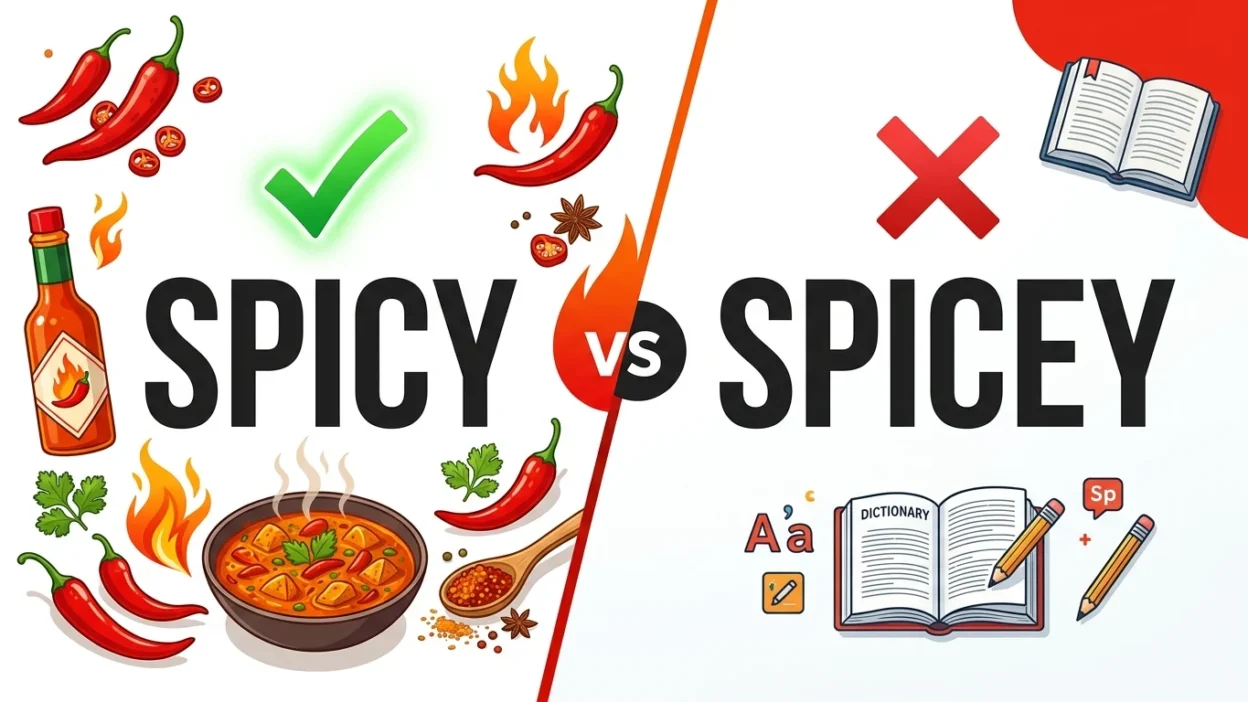
Spicy is the correct spelling.
✅ Correct: This curry is very spicy.
❌ Incorrect: This curry is very spicey.
The word spicy means having a strong flavor from spices or being exciting, lively, or interesting. The spelling spicey is considered a misspelling in standard English.
What Does “Spicy” Mean?
The adjective spicy has two primary meanings.
1. Containing Strong Spices
Most commonly, spicy describes food with a noticeable amount of seasoning, heat, or pungent flavor.
Examples:
- The tacos were incredibly spicy.
- I enjoy spicy noodles with chili peppers.
- This sauce is too spicy for children.
2. Exciting or Interesting
Spicy can also describe something exciting, bold, dramatic, or controversial.
Examples:
- The interview included some spicy questions.
- The celebrity shared a spicy opinion online.
- Their conversation became surprisingly spicy.
This figurative meaning is common in modern English, especially online and in entertainment media.
Is “Spicey” a Real Word?
No. Spicey is not the standard spelling recognized by major English dictionaries.
When people write spicey, they almost always intend to write spicy. The extra “e” is a common spelling error that occurs because the root word is spice.
Although you may occasionally see “spicey” online, it is generally viewed as incorrect in professional, academic, and formal writing.
Spicey vs Spicy: Side-by-Side Comparison
| Feature | Spicy | Spicey |
|---|---|---|
| Correct spelling | ✅ Yes | ❌ No |
| Dictionary recognized | ✅ Yes | ❌ No |
| Used in formal writing | ✅ Yes | ❌ No |
| Used in academic writing | ✅ Yes | ❌ No |
| Means flavorful or hot | ✅ Yes | ❌ Not officially |
| Recommended usage | Always | Never |
The rule is simple: always choose “spicy.”
Why Is “Spicy” Spelled Without an E?
The confusion often comes from the root word spice.
Many people assume that because the base word ends in “e,” the adjective should keep that letter. However, English spelling rules often drop the final “e” before adding certain suffixes.
For example:
- Spice → Spicy
- Ice → Icy
- Juice → Juicy
- Noise → Noisy
Notice the pattern? The silent “e” disappears before adding “-y.”
This is why spicy is correct and spicey is not.
Examples of Spicy in Everyday Sentences
Understanding a word becomes easier when you see it used naturally.
Food and Cooking
- I love spicy chicken wings.
- The salsa was spicy but delicious.
- Thai cuisine often includes spicy dishes.
- These peppers make the soup extremely spicy.
Restaurant Reviews
- The curry had a rich and spicy flavor.
- If you enjoy spicy food, you’ll love this restaurant.
Casual Conversations
- That’s a spicy take on the issue.
- Her spicy sense of humor keeps everyone entertained.
Writing and Media
- The article contained several spicy opinions.
- The podcast covered some spicy topics this week.
Common Mistakes People Make
When comparing spicey vs spicy, several mistakes appear repeatedly.
Mistake #1: Adding an Extra E
❌ The wings were spicey.
✅ The wings were spicy.
Mistake #2: Assuming the Root Word Stays Unchanged
Many writers think:
- Spice + Y = Spicey
But English spelling rules drop the silent “e”:
- Spice + Y = Spicy
Mistake #3: Trusting Informal Social Media Usage
Just because a spelling appears online doesn’t make it correct.
Many social media users write spicey, but standard English still recognizes only spicy.
Spicy Synonyms and Related Words
Using related vocabulary can make your writing more engaging and improve SEO relevance.
Synonyms for Spicy (Food Context)
- Hot
- Peppery
- Zesty
- Piquant
- Flavorful
- Fiery
- Tangy
- Seasoned
Synonyms for Spicy (Figurative Context)
- Exciting
- Bold
- Provocative
- Controversial
- Dramatic
- Lively
- Intriguing
Related LSI Keywords
- spicy food
- hot food
- chili peppers
- flavorful dishes
- seasoning
- spicy cuisine
- cooking spices
- spicy flavors
- spicy recipes
- food vocabulary
These related terms help readers understand the topic more comprehensively.
American vs British English
Many spelling differences exist between American and British English.
Examples include:
- Color vs Colour
- Center vs Centre
- Favorite vs Favourite
However, spicy is not one of those differences.
American English
✅ Spicy
British English
✅ Spicy
Both versions of English use the exact same spelling.
No matter where your audience lives, spicy is always correct.
Why Correct Spelling Matters
At first glance, the difference between spicy and spicey may seem minor.
However, proper spelling matters for several reasons:
Professionalism
Correct spelling makes your writing appear polished and trustworthy.
Better Communication
Readers understand your message more easily when standard spelling is used.
SEO Benefits
Search engines generally favor well-written, error-free content.
Academic Accuracy
Schools, universities, and professional organizations expect correct spelling.
Even small spelling mistakes can distract readers and reduce credibility.
Easy Tricks to Remember the Correct Spelling
Need a simple way to avoid this mistake?
Remember Similar Words
Compare these examples:
- Ice → Icy
- Juice → Juicy
- Noise → Noisy
- Spice → Spicy
The pattern stays consistent.
Think of the Rule
Drop the silent “e” before adding “-y.”
Practice With Examples
Write these sentences:
- The curry is spicy.
- I enjoy spicy food.
- That was a spicy comment.
Repeated exposure helps the correct spelling become automatic.
When to Use Spicy
Use spicy whenever you describe:
Food
- Spicy noodles
- Spicy curry
- Spicy salsa
Flavor
- Spicy aroma
- Spicy seasoning
- Spicy taste
Personality or Opinions
- Spicy humor
- Spicy debate
- Spicy commentary
In every case, the spelling remains spicy.
Frequently Asked Questions (FAQs)
1. Is it spicy or spicey?
Spicy is the correct spelling. Spicey is a misspelling.
2. Why do people write spicey?
People often keep the “e” from the root word spice, even though English spelling rules remove it before adding “-y.”
3. Is spicey in the dictionary?
Major English dictionaries recognize spicy, not spicey, as the standard spelling.
4. Is spicy an adjective?
Yes. Spicy is an adjective that describes food, flavors, opinions, conversations, or situations.
5. Does British English use spicey?
No. Both British and American English use spicy.
6. What is another word for spicy?
Depending on context, alternatives include hot, peppery, zesty, piquant, fiery, bold, or provocative.
7. Can spicy mean more than food?
Yes. It can also describe something exciting, dramatic, controversial, or interesting.
8. How can I remember the correct spelling?
Think of similar words like icy, juicy, and noisy. Following the same pattern makes spicy easier to remember.
Summary
The debate over spicey vs spicy has a clear winner: spicy is the correct spelling in modern English. Whether you’re describing a hot curry, flavorful tacos, a bold opinion, or an exciting conversation, the proper word is always spicy. The alternative spelling spicey is considered an error and should be avoided in professional, academic, and everyday writing.
Understanding the spelling rule also makes the choice easier to remember. Just as ice becomes icy and juice becomes juicy, spice becomes spicy by dropping the silent “e.” This simple pattern can help you write with greater confidence and accuracy.

Jhon Thomson is a creative content writer at NickHive, specializing in usernames and nickname ideas. He enjoys exploring name trends, online identity culture, and branding inspiration. With a passion for digital creativity, Jhon helps readers discover unique, stylish, and meaningful names for social media, gaming, and personal branding.